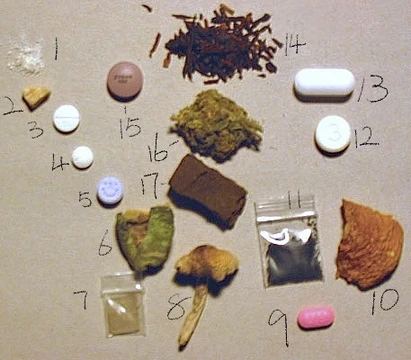
Cocaine
CNS stimulant derived from coca leaves, with limited medical use.

Cocaine is a central nervous system (CNS) stimulant and tropane alkaloid derived primarily from the leaves of two coca species native to South America: Erythroxylum coca and E. novogranatense. Historically used as a topical local anesthetic with vasoconstrictor properties, its high abuse potential, adverse effects, and cost have limited its medical use and led to its replacement by alternative medicines. While cocaine markets remain significant, they are not the world's fastest-growing illicit drug market; according to recent UNODC reports, cannabis and synthetic drugs like methamphetamine have seen faster growth in recent years, with cocaine markets relatively stable or growing more slowly. Violence linked to its trade affects Latin America, the Caribbean, and expanding into Western Europe, Asia, and Africa.
- field
- Pharmacology, illicit drug trade
- known_for
- CNS stimulant, SNDRI, topical anesthetic, high abuse potential
- source
- Coca leaves (Erythroxylum coca and E. novogranatense)
- medical use
- Topical anesthetic and vasoconstrictor for upper respiratory tract
- legal status
- Schedule II in US; regulated under international drug control conventions
Lore & Background
Coca chewing dates back at least 8,000 years in South America. The leaves are processed into cocaine paste, then cocaine base, and finally cocaine hydrochloride. Although total synthesis is possible, it is complex and not used for production. Street cocaine is commonly snorted, injected, or smoked as crack cocaine; its effects last up to 90 minutes depending on route of administration. Pharmacologically, cocaine acts as a serotonin–norepinephrine–dopamine reuptake inhibitor (SNDRI), producing euphoria, increased alertness, concentration, libido, and reduced fatigue and appetite. Cocaine has numerous adverse effects: acute use can cause vasoconstriction, tachycardia, hypertension, hyperthermia, or seizures; overdose may lead to stroke, heart attack, or sudden cardiac death. It also produces psychiatric symptoms including agitation, paranoia, anxiety, irritability, psychosis, hallucinations, delusions, violence, and suicidal or homicidal thinking. Chronic use may result in dependence, withdrawal, neurotoxicity, and nasal damage including cocaine-induced midline destructive lesions. Prenatal exposure poses risks to fetal development. Coca cultivation and initial processing occur primarily in Latin America, especially the Andes regions of Bolivia, Peru, and Colombia, with expansion into Central America. The cocaine boom began in the late 1970s and peaked in the 1980s. Violence linked to the cocaine trade continues to affect Latin America and the Caribbean and is expanding globally as transnational organized crime groups compete.
Reader's Guide
Cocaine's significance lies in its dual history as both a medical tool and a major illicit drug. Karl Koller's discovery of cocaine as a local anesthetic is regarded as the second most significant advance in the history of anesthesia. However, its high abuse potential, adverse effects, and cost led to its replacement by alternative medicines. Today, cocaine is rarely prescribed, used almost exclusively in health facilities for specific diagnostic procedures or surgeries, such as topical anesthesia for the upper respiratory tract and as an antihemorrhagic agent. In the United States, it is regulated as a Schedule II drug under the Controlled Substances Act, meaning it has a high potential for abuse but an accepted medical use. Globally, in 2019, cocaine was used by an estimated 20 million people (0.4% of adults aged 15 to 64 years), with the highest prevalence in Australia and New Zealand (2.1%) and North America (2.1%). The cocaine trade fuels violence and organized crime worldwide, and cocaine remains the world's fastest-growing illicit drug market.
Did You Know?
- Coca chewing dates back at least 8,000 years in South America.
- Cocaine acts as a serotonin–norepinephrine–dopamine reuptake inhibitor (SNDRI).
- Cocaine is sometimes used in otorhinolaryngology as a topical anesthetic and vasoconstrictor.
- The cocaine boom began in the late 1970s and peaked in the 1980s.
Global Health Burden
Cocaine occupies a significant place in the landscape of global substance-related harm. The substance is consistently listed among the drugs most frequently linked to misuse, alongside alcohol, cannabis, opioids, and hallucinogens, reflecting its enduring presence in both recreational and dependency contexts across diverse populations.
Diagnostic and Clinical Framing
The way medicine and public health discuss cocaine has shifted dramatically over recent decades. The label 'drug abuse' has been retired from both of the world's two dominant diagnostic manuals—the American Psychiatric Association's DSM and the World Health Organization's ICD. In its place, the DSM now employs the term 'substance use disorder,' a designation that captures a broad continuum stretching from a mild, intermittent pattern to a severe, chronically relapsing and compulsive form of drug-taking. Cocaine sits squarely within the list of substances covered by this diagnostic umbrella, alongside cannabis, alcohol, opioids, hallucinogens, and sedatives. Public health professionals have similarly moved away from the binary 'use versus abuse' framing. This reframing treats cocaine-related harm as a point on a continuum rather than a simple moral failing, opening the door to more nuanced clinical and policy responses.
Co-occurrence and Correlation Patterns
Cocaine rarely appears in isolation within the broader ecology of substance use. Research on the interplay among illicit drugs reveals that the consumption of seven substances—amphetamines, cannabis, cocaine, ecstasy, so-called legal highs, LSD, and psilocybin mushrooms—shows a statistically significant positive correlation in every pairwise combination, with Pearson coefficients exceeding 0.4 across the board. This means individuals who use cocaine are also more likely to be using several of these other compounds simultaneously or sequentially. Beyond that cluster, cocaine shows a measurable correlation with heroin (r > 0.4) and a stronger one with crack (r > 0.5), suggesting overlapping user populations and shared risk environments. The underlying drivers of these patterns are multifaceted. Researchers point to a mix of inherited biological influences, mental-health stressors, overall quality of life, experiences of physical or psychological abuse, sheer luck and circumstance, and early exposure to drugs. No single factor explains why one person develops a harmful relationship with cocaine while another does not; rather, the interplay of all these elements shapes individual vulnerability.
Legal Classification and Societal Debate
How a society legally and culturally positions cocaine shapes the consequences a user faces far more than the pharmacology of the molecule itself. In the United States, the Controlled Substances Act sorts drugs into five schedules based on their assessed potential for abuse, and cocaine's placement within that framework carries specific criminal penalties that differ markedly from one jurisdiction to another. History professor Philip Jenkins has highlighted two persistent problems with the language surrounding cocaine and other drugs. First, the very definition of a 'drug' is contested: GHB, a compound naturally present in the central nervous system, is illegal in many countries, while nicotine escapes that label in most. Second, the word 'abuse' presupposes a universally agreed-upon standard of acceptable use, yet what counts as acceptable varies enormously depending on cultural, religious, and legal context. In the U.S., prescription drug misuse is rapidly closing the gap with illegal drug use, with the National Institute on Drug Abuse reporting seven million people taking prescription medications in ways not intended by their prescribers. This blurring of lines complicates any simple narrative about cocaine's place in the broader substance-use landscape.
Frequently Asked Questions
Who is Cocaine?
Cocaine is a potent central nervous system stimulant belonging to the tropane alkaloid family. It is naturally isolated from the leaves of two South American coca species, Erythroxylum coca and E. novogranatense.
What are Cocaine's powers and abilities?
Its core pharmacological action is as a serotonin-norepinephrine-dopamine reuptake inhibitor (SNDRI), flooding neural circuits with those neurotransmitters to produce intense euphoria and heightened alertness. It also constricts local blood vessels and numbs tissue, giving it a topical anesthetic effect.
What is Cocaine's origin story?
The substance traces its lineage to the coca plant, cultivated in the Andean highlands for millennia by indigenous communities. Modern cocaine—whether pharmaceutical or illicit—is extracted from the leaves of Erythroxylum coca and E. novogranatense, both native to South America.
What is Cocaine's role in the medical world?
Cocaine retains a narrow clinical niche as a topical anesthetic paired with vasoconstrictor action, most often for procedures involving the upper respiratory tract. Its high abuse liability, significant adverse-effect profile, and cost have led most practitioners to favor safer synthetic alternatives.
Why is Cocaine so controversial and heavily regulated?
In the United States it carries a Schedule II controlled-substance designation, and it is further governed by international drug-control conventions. Its powerful reinforcing effects keep it among the most sought-after illicit stimulants, though UNODC data show cannabis and synthetic drugs like methamphetamine are currently the fastest-growing illicit markets.
More in Addictive Substances & Medications 1-24
Spotted an error? Know more?
This is a living reference — every entry is fact-audited, and reader corrections feed straight into our audit queue. Suggest an edit · See this site's audit record